
Positioning a rear-facing child seat
Child seats must be placed and secured in a rear seating position.
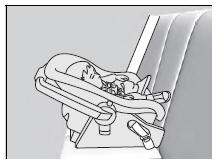
When properly installed, a rear-facing child seat may prevent the driver or a front passenger from moving their seat all the way back, or from locking their seat-back in the desired position. It can also interfere with proper operation of the passenger's advanced front airbag system.
If this occurs, we recommend that you install the child seat directly behind the front passenger's seat, move the seat as far forward as needed, and leave it unoccupied. Or, you may wish to get a smaller rear-facing child seat.
Protecting Infants
WARNING
Placing a rear-facing child seat in the front seat can result in serious injury or death during a crash. Always place a rear-facing child seat in the rear seat, not the front.
Rear-facing child seats should never be installed in a forward facing position. Always refer to the child seat manufacturer’s instructions before installation.
See also:
Audio/Information Screen
Displays audio status and wallpaper, and allows you to go to various setup
options.
Switching the Display
Press DISPLAY button. Rotate and
select the mode from the three display modes.
Press ...
Recommended CDs
• Use only high-quality CD-R or CD-RW discs labeled for audio use.
• Use only CD-R or CD-RW discs on which the recordings are closed.
• Play only standard round-shaped CDs.
CDs with MP3, WM ...
If the Low Oil Pressure Indicator Comes On
Reasons for the indicator to come on
Comes on when the engine oil pressure is low.
What to do as soon as the indicator comes on
1.Immediately park the vehicle in a safe place.
2. If necessary, t ...
